
How to Speed Up Locum Tenens Credentialing for CRNAs
A new locum assignment is confirmed, and now the credentialing file stands between you and your first day.
Credentialing is how an agency and a facility verify that you’re eligible to practice, and on a locum assignment you go through it twice. The published guidance comes from agencies that credential physicians, PAs and NPs, and the steps below apply it to a CRNA file. Typical credentialing runs about a month, but a complete application, references who are ready and quick replies keep your file from running longer.
What you need before you start
Gather these before the credentialing team asks, because requirements vary by agency and facility, so treat this as a starting set and confirm it with your recruiter:
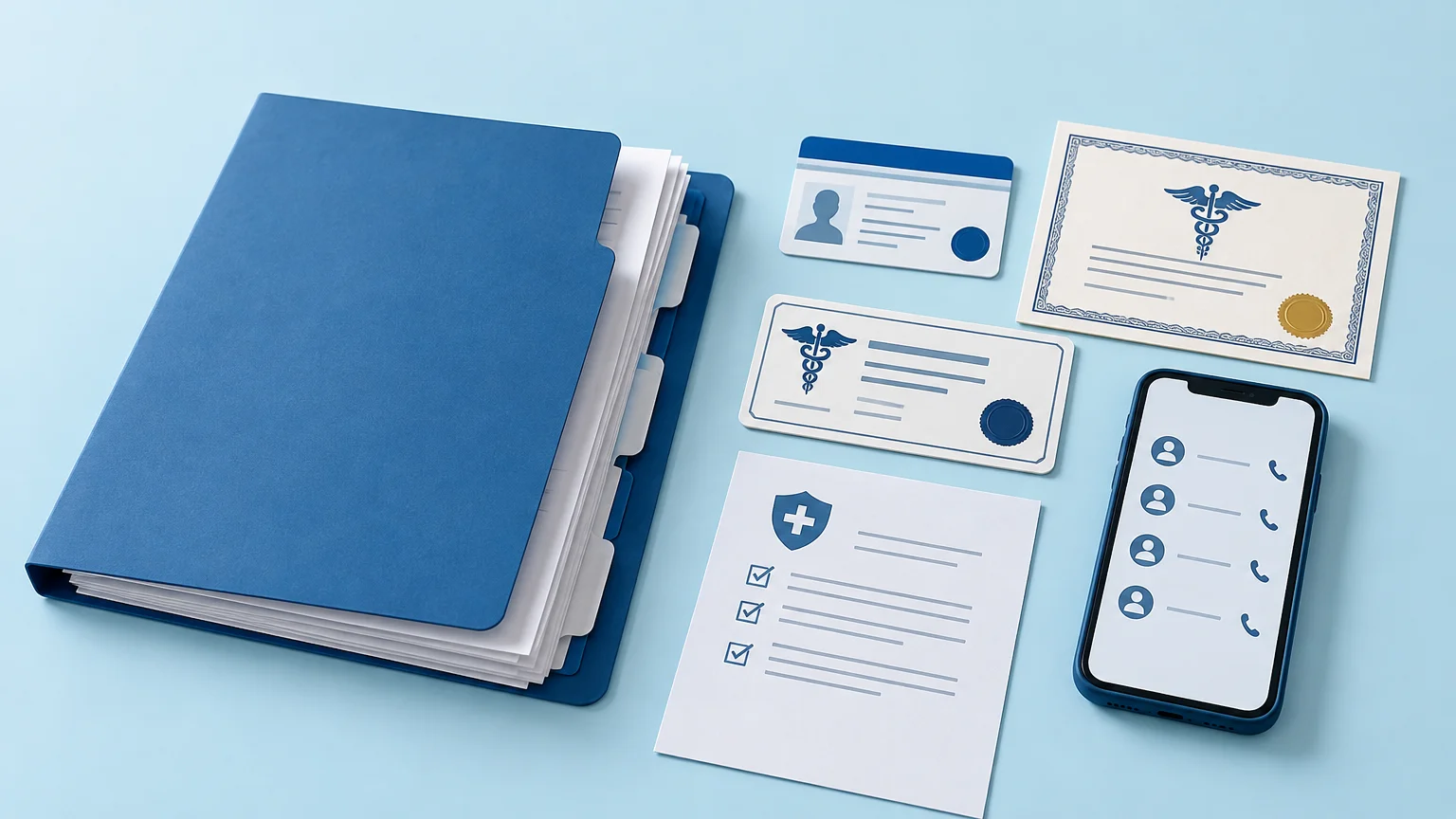
- Medical licenses for every state you hold, plus the details of any new state you need
- DEA ID number
- Board certification details
- Work history with dates, plus a current CV
- Malpractice insurance information
- Case information for the procedures you perform
- Education details
- Health documentation
- Peer references with current, correct contact details
- Specialty certificates if the position asks for them
How locum credentialing is structured
Locum credentialing runs on two layers. The agency verifies you first, and then each facility credentials you again for its own site. Because the agency’s W-2 providers have to meet its own standards as well as those of its malpractice and insurance carriers, the agency’s review is a full one, not a formality. The facility step ends in privileging, which means being authorized to work in specific roles at that specific facility.
Both layers rely on primary source verification. That means going to the source of the information to validate it, rather than accepting a copy or a verbal acknowledgement.
A CRNA emails a scan of a state license and a board certificate with the application and assumes the file is done. It isn’t, because the credentialing team contacts the issuing source to confirm each item before it counts. The agency then repeats the exercise for the hospital, which has its own requirements and verifications. The scan is only a starting point, and the file closes when the source confirms it.
The agency and facility teams share information to avoid asking for the same document twice. Your references can still be contacted by both, because each side looks for different information.
1. Complete the application in full
A complete, accurate application is the biggest thing you control, because much of the credentialing information is pulled from it and missing or incorrect data can cause delays.
- Open the agency’s application as soon as the assignment is confirmed.
- Enter your full education and employment history.
- List every license or certificate you hold.
- List each hospital you’ve been affiliated with or done procedures at.
- Compare every date and employer against your current CV and fix any mismatch before you submit.
- Expect a county criminal background check as part of this step.
When it’s done right, each entry in the application matches your CV line for line, so no question about the file comes from a missing or conflicting field.
2. Line up your references early
References validate your skills and define your scope of practice for malpractice purposes, so choose people who can speak to the work you’ll be doing.
- Name at least three references, and make sure two are clinicians within your specialty.
- Check that each one has observed your work within the last two years and is qualified at the same level or higher.
- Confirm each person’s current phone number and email address, and enter them exactly.
- Add your program director if you finished post-graduate training within the last nine months.
- Tell each reference that the agency and the facility may both contact them.
You should end up with a list of people who can each speak to your competency and your procedures from recent, direct observation.
Tip: Share the list of procedures you’ll be expected to perform on the assignment with your references, since they’ll be asked to rate your ability to do them.
3. Gather your supporting documents
Assemble the document set once so the credentialing team doesn’t have to request anything twice.
- Collect your medical licenses, DEA ID number, board certification, work history, malpractice insurance, case information, education and health documentation.
- Send the documents by email, fax or mail to the credentialing team.
- Ask your coordinator whether license and education copies are needed. In most cases they aren’t, because the team verifies education, board certification and all licenses, including DEA, directly at the source.
- Optional: Add specialty extras if the position calls for them. A pediatric position, for example, needs a pediatric life support certificate.
You should be able to hand over everything in a single batch, with only specialty-specific items left to add.
4. Start state licensing at once
If the assignment is in a state where you aren’t licensed, start the license application right away, since depending on the state it can take a couple of weeks or a few months.
- Fill out the application and send it to the state board.
- Get your exam scores, state licenses, and school and training verification.
- Provide your references.
- Submit all documents to the board for review.
- Check whether the state requires your school to send its documentation directly, and request it early if so.
When it worked, the board has your complete packet and the only thing left is its review.
5. Explain gaps and history flags up front
Gaps and past events trigger questions, so answer them in writing before anyone has to ask.
- Review your work history for any gap between positions.
- Compare your application with your resume and resolve any discrepancy.
- Write a short, factual explanation for each gap.
- If you have a malpractice claim, criminal history or licensure action, write a short explanation for it too.
- Expect the agency to query the Office of the Inspector General and the National Practitioner Data Bank for your disciplinary history.
A malpractice claim doesn’t necessarily disqualify you, but it, a criminal history or a licensure action sends the file to the quality management department for additional review. With explanations ready, you answer that review in one reply instead of several.
6. Respond fast and set a contact preference
Slow replies and slow references are the delays the agencies name, so make yourself easy to reach and answer quickly.
- Read the intake email that outlines what the agency needs from you.
- Tell the credentialing team whether you prefer email, phone calls or text.
- Answer every question the same day if you can.
- Schedule the drug screening when the team asks for it.
- Alert your references that the agency will be reaching out to them.
When it works, the team reaches you on the first try and your references aren’t surprised by the call.
7. Plan for facility credentialing and privileging
The facility stage depends on the hospital’s committee calendar, so you can’t speed it up alone. Department heads and hospital boards have to meet and approve your application, which makes it the part that can take the most time.
- Ask your agency coordinator when the facility’s approval group is next meeting.
- Complete the hospital application the credentialing team sends you. The team fills in what it can first.
- Answer any blanks or questions the team passes on, since it works directly with the facility.
- Expect each hospital to run its own requirements and primary source verifications, even if you’ve been credentialed elsewhere.
You should see a hospital application that arrives mostly filled in, with only the gaps left for you.
How to tell credentialing is on track
Compare your progress with the typical timelines and confirm each stage has closed. The timelines come from agencies credentialing physicians, PAs and NPs, not CRNAs specifically, so use them as a rough guide.
- Typical length: CompHealth says PA and NP credentialing typically takes about 25 days, and it can happen within a few days if everything goes perfectly.
- Average turnaround: Weatherby reports 28-30 days before approval.
- Application: submitted in full and matched to your CV.
- References: all have been contacted and have responded.
- Verification: licenses, education and board certification confirmed at the source.
- Facility approval: the hospital’s department heads and board have met and approved.
If you’re past the typical range, find the stage that’s still open and go back to that step.
Fixing common delays
Most delays trace back to a handful of causes, each with a fix:
- References are slow to respond. This is a known cause of delay, so alert each reference that the agency will be contacting them and remind them to reply quickly.
- Outside parties are slow to verify. Schools, boards and other sources can take extra time. Ask your coordinator which verification is still pending and whether you can nudge the source.
- The application has missing or incorrect data. Much of the file is pulled from it, so recheck every field against your CV and correct it.
- Requests go unanswered. Tell the team whether you prefer email, phone or text, and reply as soon as a request arrives.
- The facility hasn’t approved yet. Approval depends on the facility’s meeting timeline, so ask your coordinator when the next meeting is.
Credentialing questions answered
How long does locum credentialing approval stay valid?
At Weatherby, once you pass credentialing you don’t repeat the agency process for two years. Each new hospital still runs its own credentialing, because each facility has its own requirements and primary source verifications.
Do non-US citizens face extra credentialing steps?
They can. Weatherby requires proof of permanent resident status and/or employment authorization documents, and certain work visas, such as the H1B, aren’t acceptable for work with that agency. Check your own agency’s rules.
Will my agency pay for a new state license?
It depends on the agency. CompHealth states it helps with new-state licenses and covers the cost. Ask your recruiter before you commit, and start the application early either way.
Next steps
The application and the references are the parts you control, so start both the day an assignment is confirmed. The rest depends on verification sources and facility committees.
Medical Associates Consulting has placed CRNAs and other anesthesia clinicians in locum tenens roles since 2001, and its specialty recruiters can help you line up documents for a new assignment. Open your application today and check it against your CV.
Share
Facebook
X
LinkedIn
Telegram
Tumblr
Whatsapp
VK
Bluesky
Threads
Mail